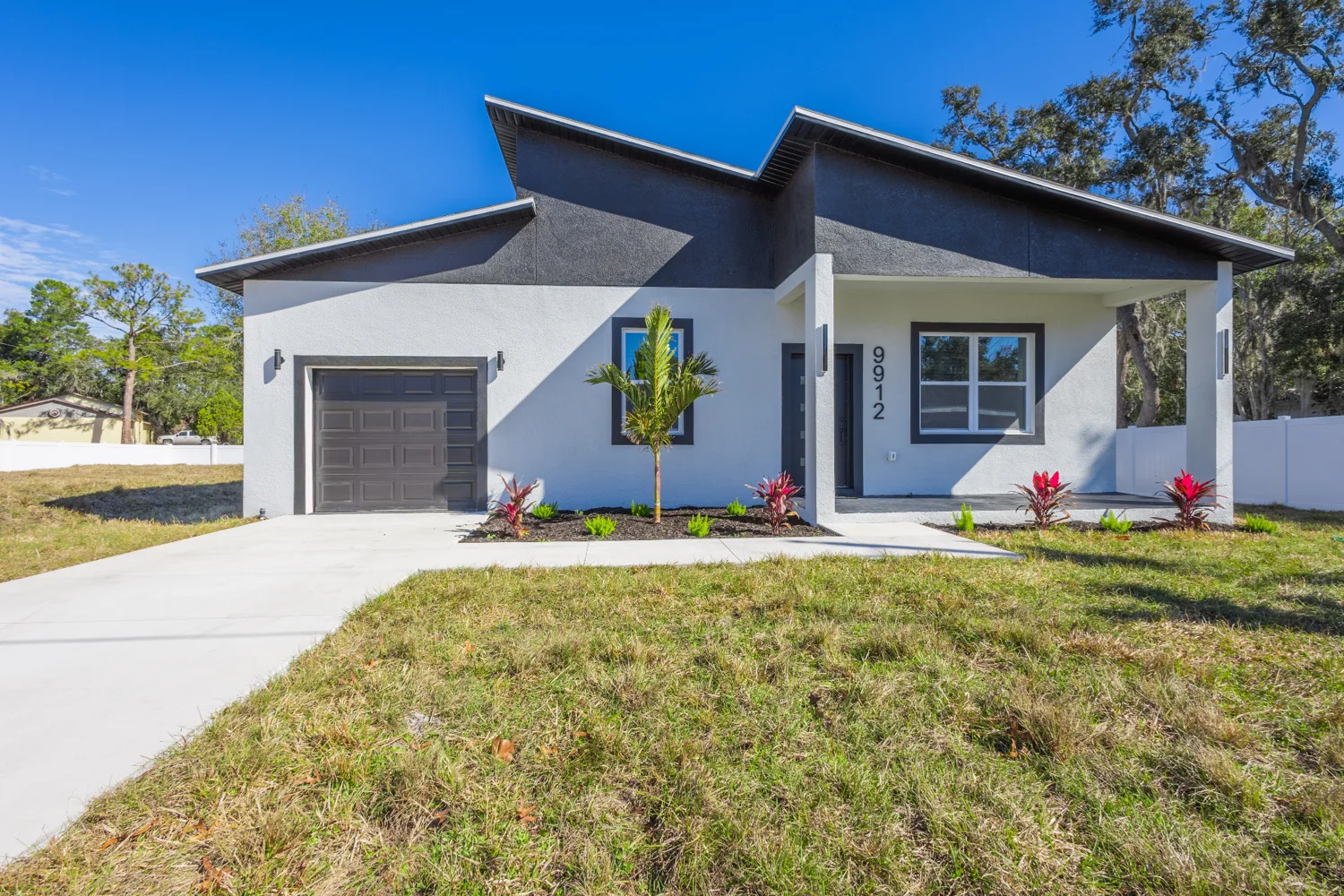
Quick answer: The best time depends on which way the house faces. The sun rises in the east and sets in the west, so an east-facing front is usually lit in the morning and a west-facing front in the afternoon. A north-facing front gets little direct sun, so bright overcast light or twilight often works better. Check sun times for the address before booking, and keep a backup date during the rainy season.
Two photos of the same house, taken a few hours apart, can look like different properties. In one, the front is bright and the colors are true. In the other, the house is a dark shape against a bright sky, with long shadows across the lawn. The difference is usually just the position of the sun.
You don’t need to be a photographer to plan for this. Knowing which way the house faces, and a few minutes with a free sun calculator, is enough to choose a better time.
Why the time of day matters
When the sun lights the side of the house facing the camera, the walls, roof lines, landscaping and front door are easy to see. When the sun is behind the house, that side falls into shade. The sky behind it stays bright, so the house looks darker and flatter than it does in person, and details get lost.
The angle of the sun matters too. Low morning and late-afternoon light brings out texture and color, while light from high overhead can leave deep shadows under eaves, porches and trees.
Start with the direction the front faces
Stand at the curb looking at the front door, and check which way you’re facing with your phone’s compass or a map app. The front faces the opposite direction. Then use these as starting points:
- East-facing front: lit by the morning sun. By afternoon the front is in shade.
- West-facing front: lit in the afternoon and toward sunset. Mornings leave it shaded.
- South-facing front: at Tampa Bay’s latitude, the midday sun is always in the southern part of the sky, so a south-facing front gets light for much of the day.
- North-facing front: gets little direct sun for much of the year. A bright overcast day, or a twilight photo with the lights on, often shows it best.
These are general patterns. Trees, neighboring buildings and the time of year all change how much light actually reaches the house.
The back of the house may need a different time
The backyard usually faces the opposite way from the front. If the front looks best in the morning, the pool, lanai and back of the house often look best in the afternoon. When the outdoor living space is a big part of the listing, it’s worth deciding which side matters most and planning around it.
A shoot can also be ordered around the sun: one side of the exterior while it’s lit, interiors in the middle, and the other side once the light has moved around. That only works if the appointment is long enough, so mention it when you book.
Interiors: watch for direct sun through windows
Inside, the goal is even, bright light. Direct sun streaming through a large window can create hot spots on the floor and furniture, while the rest of the room looks dark by comparison. If one important room gets strong direct sun at a certain time, it may be easier to photograph it before or after that.
Open all the blinds and curtains anyway, and turn on the lights. Our room-by-room preparation checklist covers the rest.
Look up the sun for the address
NOAA’s Solar Calculator, run by the Global Monitoring Laboratory, finds the sunrise, sunset, solar noon and the sun’s position for any place on Earth. Drop the pin on the property, enter the date and time, and it shows the sun’s azimuth: its compass direction, measured clockwise from true north. Compare that with the direction the house faces to see when the sun will be in front of it.
It’s also a quick way to check sunset times when planning a twilight session.
Plan around the weather
The National Weather Service office for the Tampa Bay area defines the rainy season for most of West Central Florida as running from May 25 to October 10. It peaks from July through early September, with heavy rainfall and frequent lightning. During those months, a clear morning can turn quickly, so agree on a backup date when you book.
A bright overcast sky isn’t a reason to cancel. Soft, even light can suit interiors and north-facing fronts, and clouds avoid harsh shadows. Rain, wet driveways and dark storm skies are the conditions most worth rescheduling around.
Vacation rentals and views
For rentals, the view is often part of what guests are paying for. If the main view faces west over water, late afternoon may show it best; if the pool area gets morning sun, that may be the time to photograph it. Either way, photograph what guests will really see, at a time of day they’ll really see it.
Quick planning checklist
- Find which way the front of the house faces.
- Decide whether the front or the back matters most for this listing.
- Check sun position and sunset times for the address and date.
- Note any rooms that get strong direct sun at certain times.
- Agree on a backup date, especially from late May to early October.
- Share the details with your photographer when you book.
A little planning around the sun costs nothing, and it often makes the difference between a front photo that gets skipped and one that makes someone stop scrolling.