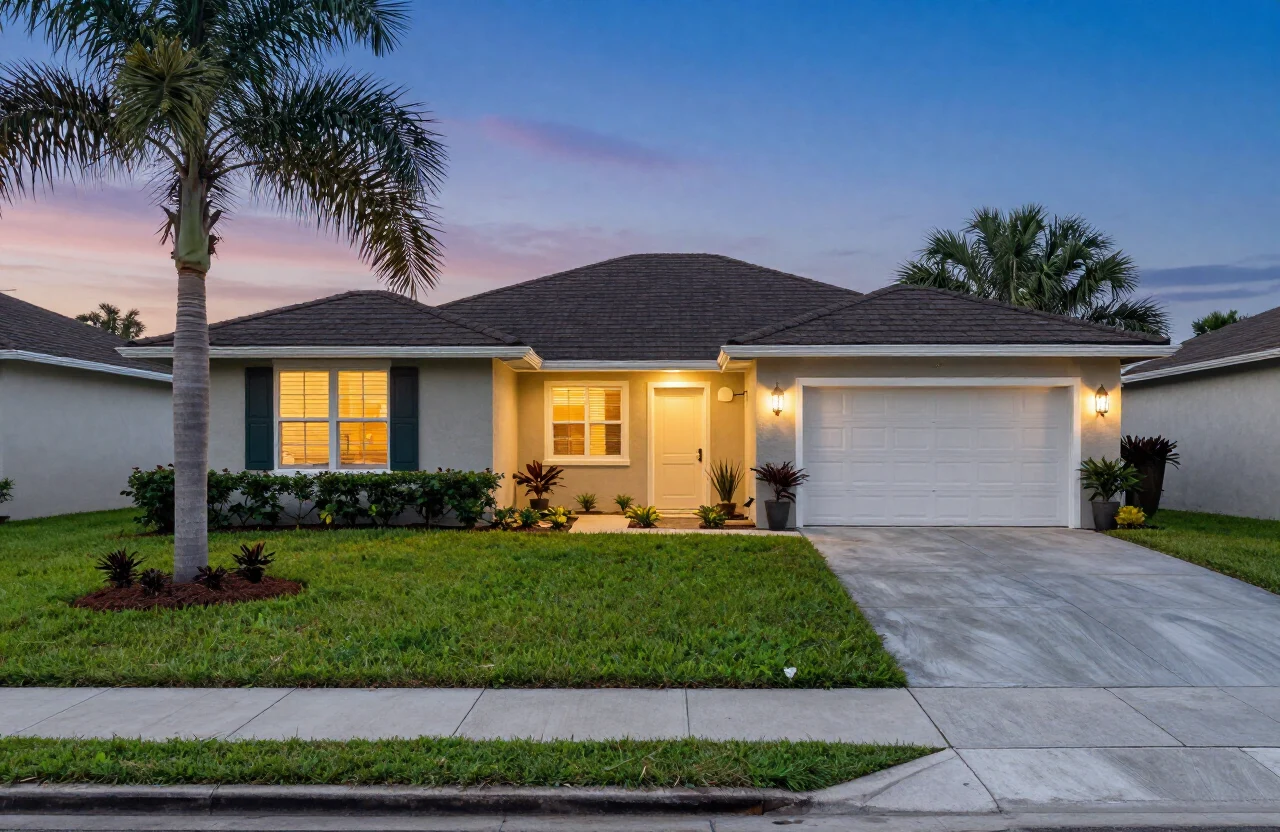
Twilight images are designed to create a sense of arrival. Warm windows, exterior lights, and a deep sky can make a property feel inviting, especially when outdoor living is part of the story. The main choice is whether to photograph that scene at dusk or create the evening look from a daytime image.
The finished images can look similar at a glance. The process, limitations, and best uses are different.
What is real twilight photography?
Real twilight photography happens around sunset, during a short period when the sky still holds color and the property’s lighting begins to read clearly. The exact window changes with the season, cloud cover, orientation of the home, and surrounding shade.
The property must be ready before that window begins. Interior lights should be on, exterior fixtures should work, vehicles should be moved, pools and landscape lights should be active, and blinds should be set. There is less time to correct those details after the light becomes balanced.
Real twilight tends to fit:
- Homes with architectural exterior lighting.
- Properties built around a pool, patio, view, or outdoor entertaining.
- Listings where the natural sky and real ambient light are important to the mood.
- Properties that can be fully prepared and accessed at the right time.
What is virtual twilight?
Virtual twilight begins with a daytime exterior photo. Editing changes the sky and overall light, and may add the appearance of illuminated windows or fixtures. It can produce a consistent evening-style image without scheduling a second visit around sunset.
Its quality depends on the starting photograph and the restraint of the edit. A believable result keeps the property’s structure, landscaping, view, and permanent features intact. Reflections, shadow direction, window light, and sky color should agree with one another.
Virtual twilight tends to fit:
- Listings that need an evening-style cover image but have limited scheduling flexibility.
- Properties where weather made an on-site twilight session impractical.
- Marketing sets that need a consistent visual treatment across several exteriors.
- Situations where cost or access does not support a separate dusk appointment.
The practical differences
| Question | Real twilight | Virtual twilight |
|---|---|---|
| When is it created? | On site near sunset | From a daytime exterior |
| Weather sensitivity | Higher | Lower after the base image exists |
| Lighting shown | Actual installed lighting | May be simulated in editing |
| Scheduling | Fixed, narrow window | More flexible |
| Best strength | Natural atmosphere | Consistency and convenience |
Accuracy and disclosure matter
A twilight image should still represent the property fairly. NAR’s consumer guidance notes that enhancements which materially alter a property should be disclosed so buyers receive an accurate picture of the home. Local MLS rules and brokerage policies can be more specific, so the responsible approach is to check the rules that apply to the listing.
Adding a dramatic sky is different from adding a pool, changing a roof, removing permanent utility equipment, or showing a view that is not present. Even small edits can mislead if they imply a feature the property does not have.
How to choose
Choose real twilight when the property genuinely becomes more compelling after the lights come on, and when the exterior, weather, and schedule can support the session. Choose virtual twilight when the goal is a polished evening mood, the daytime angle is strong, and the final image can stay truthful.
It is also reasonable to decide that neither is necessary. A bright, well-composed daytime exterior may be clearer for a shaded lot, a simple elevation, or a listing where the surroundings matter more than evening atmosphere.
Preparation for either option
- Clean the driveway, walkways, pool, and visible glass.
- Test exterior, landscape, and pool lights.
- Move vehicles, bins, hoses, and portable equipment.
- Choose the strongest exterior angle before the light changes.
- Confirm how edited images should be labeled or disclosed.
The strongest decision is the one that fits the property rather than a trend. Twilight media works when it reveals a real strength: architecture, lighting, landscape, or the feeling of outdoor life after sunset.