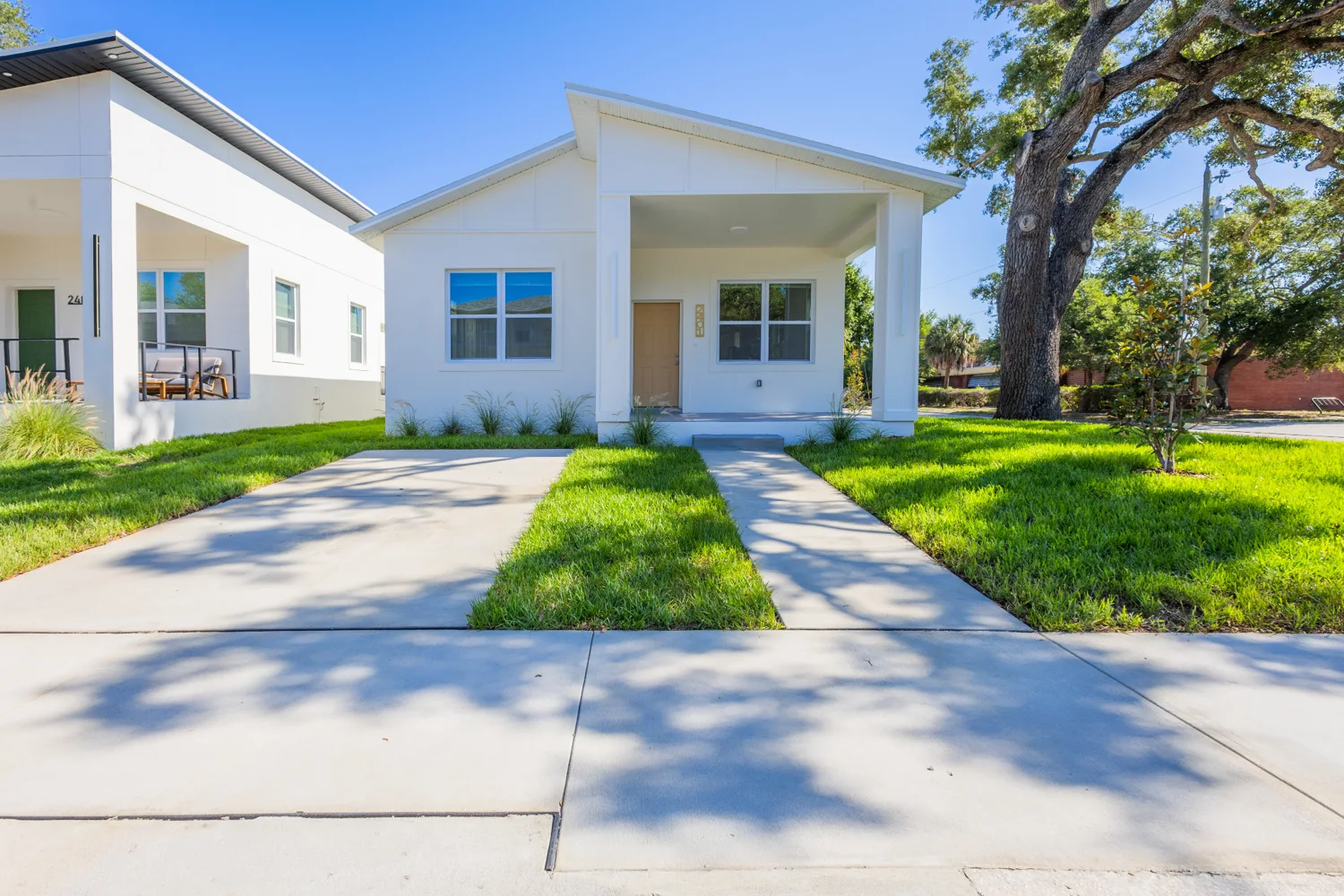
The first listing photo has a specific job: help the right viewer understand the property quickly enough to keep looking. It does not always have to be the front exterior, and it should not be chosen only because it is the most dramatic image in the folder.
A strong cover image balances recognition, appeal, and accuracy. It works when displayed large, and it survives the smaller crop used in search results, email alerts, and mobile apps.
Start with the property’s clearest reason to look
For many homes, the front exterior remains the clearest opening because it identifies the property immediately. A waterfront view, exceptional kitchen, skyline, pool, or architectural living room can lead when that feature is central to the listing.
Ask what a buyer is likely to remember after a showing. If the answer is the courtyard, view, or unusual interior volume, the cover image can introduce that strength. The next few images should then establish the exterior and layout so the gallery does not feel evasive.
Test the image as a small crop
Listing platforms display photos in different shapes. Keep the main subject near the center, with enough room around it to tolerate modest cropping. Avoid an opening image that depends on a tiny detail, distant feature, or text that disappears on a phone.
- Reduce the image to roughly the size of a phone thumbnail.
- Crop a little from both sides and check whether the subject remains obvious.
- Look for parked cars, bins, neighboring clutter, or bright sky that becomes dominant.
- Confirm that the image is sharp and evenly exposed at full size.
Match the cover to the likely search
A condo buyer may care about the view and interior light. A buyer comparing acreage may need to understand the land. A vacation-rental guest may respond first to the pool or outdoor setting. The strongest cover image reflects the property category and the information a likely viewer is trying to find.
Avoid surprise for the wrong reason
A heavily edited sky, an angle that hides an obvious condition, or a close detail that makes an ordinary feature appear oversized can create attention but weaken trust. The opening image sets an expectation that the rest of the listing has to support.
This also applies to seasonal images. A snow-covered exterior, holiday décor, or summer-green lawn can look stale when the listing remains active into another season. Use the most current accurate image when conditions materially change.
Use the next four photos to complete the introduction
The cover does not work alone. The first five images can form a compact overview: cover, main living area, kitchen, primary suite or major amenity, and a useful exterior or context view. The exact order should fit the home, but repetition this early wastes attention.
Compare two candidates objectively
Place the two strongest options beside each other at the same small size. Ignore editing style for a moment and ask which one identifies the property faster, has a clear visual center, distinguishes the listing, and creates the most accurate expectation. The answer is usually easier to see in comparison than in isolation.
The best cover photo is rarely the image with the most effects. It is the one that gives the listing a recognizable, truthful opening.