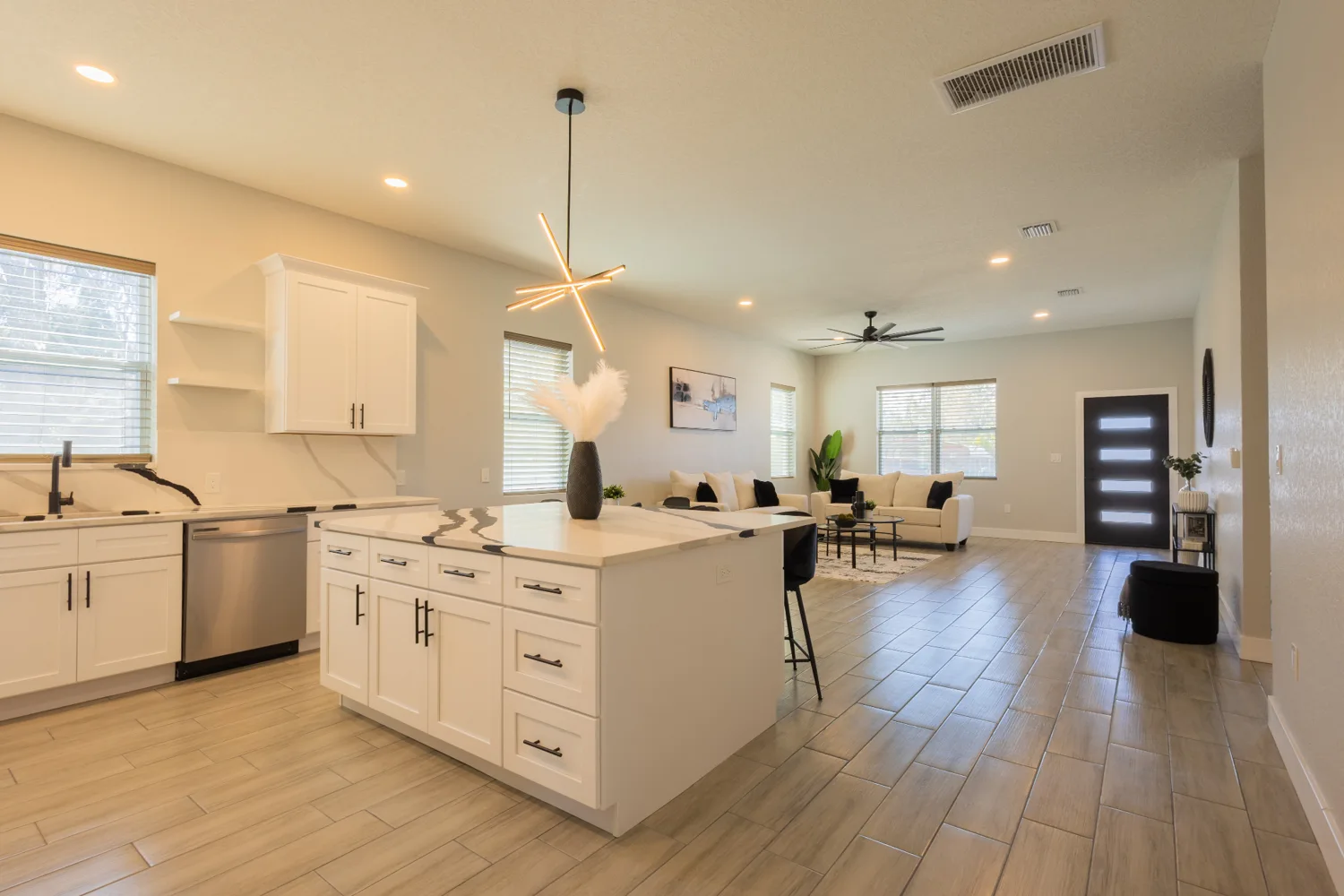
A real estate photography shot list should prevent omissions while leaving room to respond to the actual property. The same rigid list will not fit a studio condo, a waterfront home, and a rural estate.
The most useful approach is to define required coverage, priority features, and details that could be easy to miss.
Begin with the listing story
Write down the three facts the gallery must communicate. Examples might include an open main floor, renovated kitchen, water access, large lot, new roof, separate guest suite, or walkable location. Those priorities guide how many images each area deserves.
Core exterior coverage
- Front elevation from the clearest approach.
- One or two useful corner angles showing depth.
- Rear exterior and relationship to yard or outdoor living.
- Driveway, garage, entrance, and significant side access.
- Pool, patio, balcony, dock, landscape, or view.
- Community or location context when it is relevant and permitted.
Avoid counting every exterior frame as equal. A front angle that identifies the home usually carries more value than several distant views that repeat the same information.
Core interior coverage
- Entry and connection to the main living spaces.
- Living room from angles that explain size and circulation.
- Kitchen wide view, work area, and connection to dining or living.
- Dining area and any separate flexible space.
- Primary bedroom and primary bathroom.
- Secondary bedrooms and bathrooms.
- Laundry, office, bonus room, guest suite, and meaningful storage.
One strong wide image may be enough for a simple secondary bedroom. A complex open-plan space may need several angles to explain how the rooms connect.
Details that deserve their own frame
Details are useful when they represent a feature that affects value, function, or identity: custom millwork, a range, stone surface, fireplace, unusual ceiling, accessibility feature, built-in storage, smart-home equipment, or architectural material.
A close-up of generic décor generally adds less information than a wider view. The detail should belong to the property, not only to its current styling.
Special-property additions
Condominiums
Add views, balcony, building exterior, lobby, parking, and permitted amenities. Make clear which spaces belong to the unit and which are shared.
Waterfront property
Add the relationship from home to water, shoreline, dock, seawall, and wider location context. Avoid angles that suggest access the property does not have.
Land and multiple structures
Add aerial context, access roads, boundaries where they can be shown accurately, outbuildings, and the relationship between structures.
Vacation rentals
Add every sleeping arrangement, guest amenities, parking, entrance, outdoor dining, and the practical spaces that shape a stay.
Tell the photographer what cannot be inferred
Point out recent improvements, hidden access, community amenities, a detached room, solar equipment, view direction, or a feature that requires a key. Share required MLS photo counts or delivery needs before the appointment.
Review for gaps, not just quantity
After the shoot, confirm that every promised room and feature appears at least once, the exterior and interior tell the same story, and the set includes enough context to understand layout. Then remove repetitions that do not add information.
A complete gallery is not necessarily a large gallery. It is a set in which each photo has a purpose and the important questions have answers.