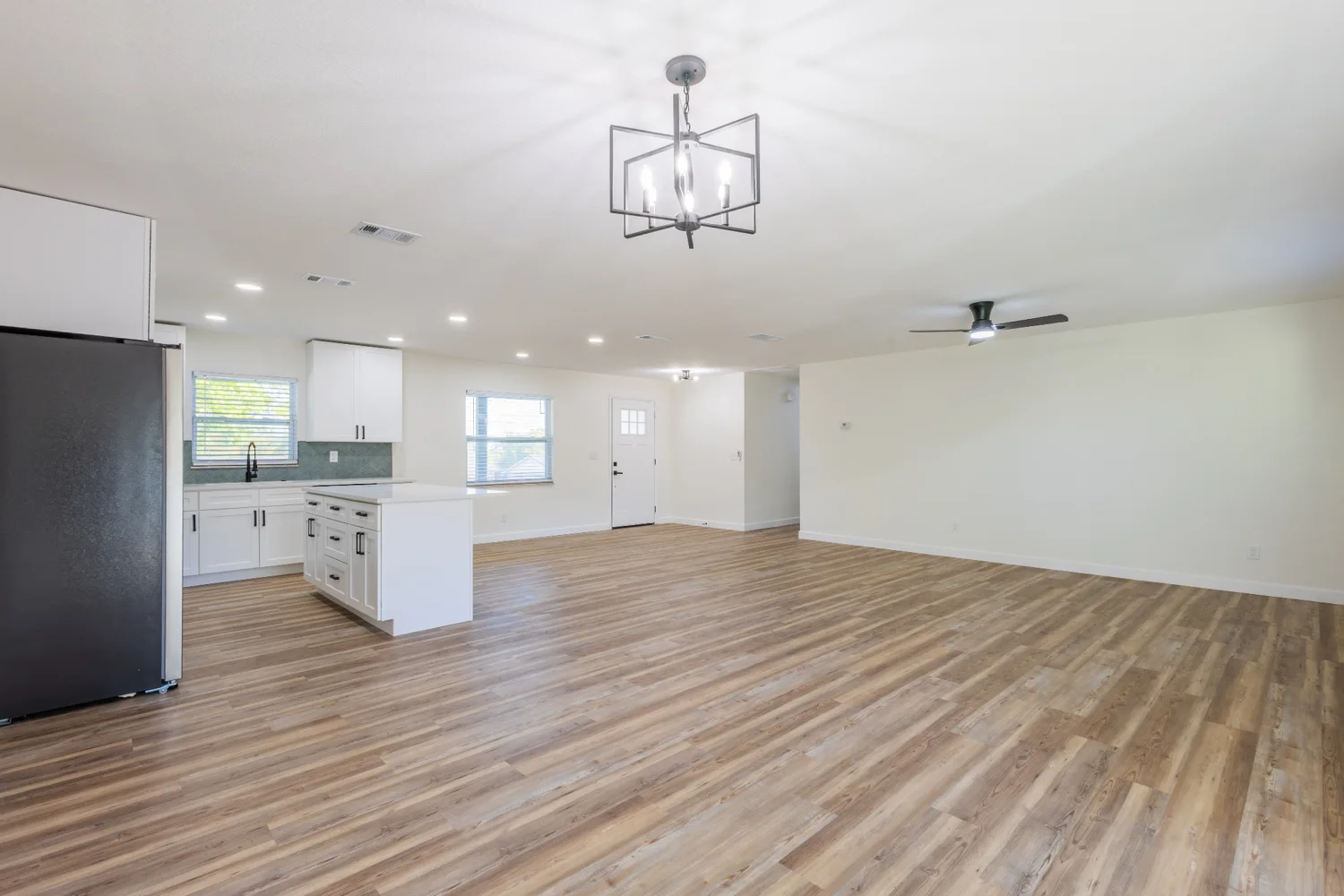
A photograph can show light, finishes, condition, and atmosphere. It often cannot show what is behind the camera or how two rooms connect. A floor plan supplies that missing structure.
Used together, the two formats help a viewer move from “I like this room” to “I understand this home.”
What photos explain well
- Natural light and window placement.
- Materials, finishes, and visible condition.
- Ceiling height and architectural details.
- Views, outdoor settings, and the visual character of a room.
- How furniture fits in a specific setup.
What a floor plan explains well
- Room relationships and circulation.
- Number and location of bedrooms and bathrooms.
- Entrances, stairs, closets, and utility spaces.
- Separation between public and private areas.
- How multiple levels or detached spaces relate.
Match image order to the plan
A gallery becomes easier to follow when its order roughly mirrors a natural route through the home. Begin with exterior and entry, move through connected living spaces, then bedrooms, bathrooms, and secondary areas. The floor plan becomes a reference rather than a puzzle.
This is especially useful in open plans, split levels, additions, and homes with two similar living areas.
Use consistent room names
If the floor plan says “flex room,” captions and listing copy should not switch between office, den, fourth bedroom, and bonus room without explanation. Consistent naming helps viewers connect each image to the correct space.
Treat measurements as information, not decoration
Measurements should follow the method and disclaimer appropriate to the service, market, and intended use. A marketing floor plan is not automatically a survey, appraisal, architectural drawing, or guarantee of square footage.
Agents should understand what was measured, what was excluded, how exterior or interior dimensions were treated, and how the finished plan is labeled. Local MLS rules and brokerage policies may affect how dimensions and square footage are presented.
Do not let a plan imply access that does not exist
Detached rooms, shared entrances, locked areas, and spaces reached only from outside need clear labels. Show doors, stairs, and transitions accurately. A floor plan should reduce ambiguity rather than tidy it away.
Decide when a plan adds enough value
Floor plans are most helpful when layout is a selling point, a potential objection, or simply difficult to infer. A compact studio may be easy to understand from three photographs. A larger home with additions, multiple levels, or a guest suite benefits more from a visual map.
Make the pair usable on a phone
Many buyers will first encounter the listing on a small screen. Keep labels large enough to read after the plan is reduced, avoid crowding the drawing with decorative text, and place the plan where it can be found without paging through dozens of images.
One useful sequence is to show the strongest opening photos, follow with a short room-by-room tour, and place the floor plan after viewers have seen the main spaces. Another is to add the plan near the beginning when an unusual layout needs immediate explanation. The property should determine the order.
Review photos and plan together
Before publishing, confirm that significant photographed rooms appear on the plan, room names match, the plan orientation is understandable, and no image appears to promise a connection the plan contradicts.
Photos invite a viewer into the property. A floor plan lets that viewer organize what they have seen. Together, they make a listing more useful.